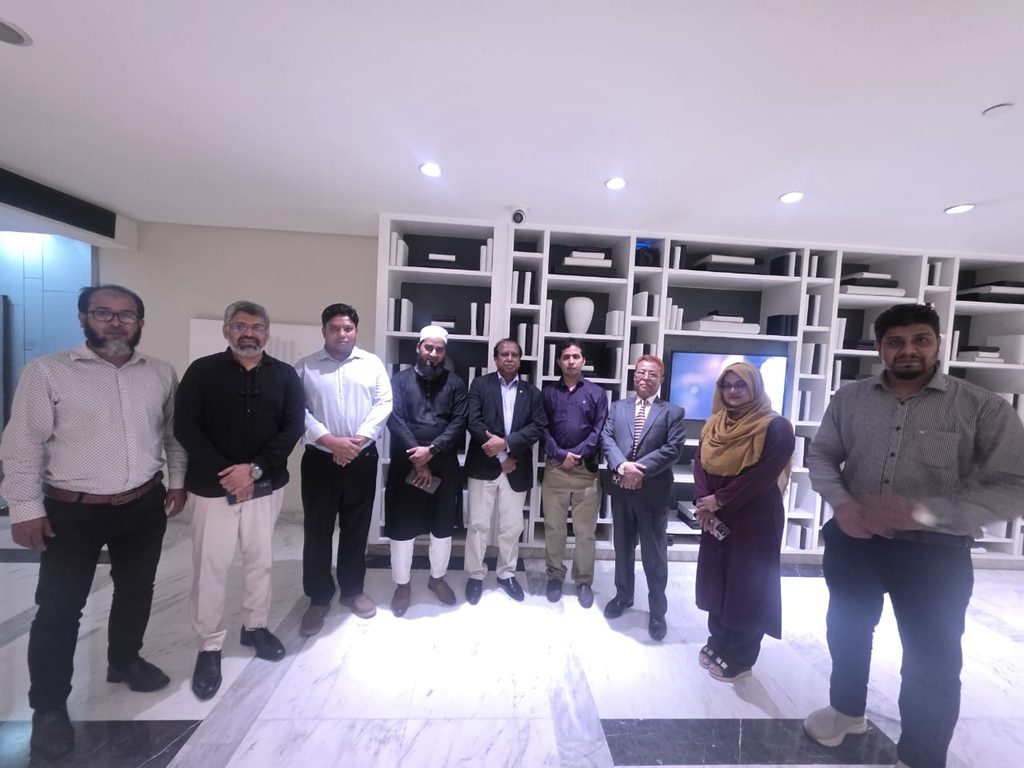
A courtesy meeting and discussion session was held between the Bangladesh Private Sector Skills Development Foundation (BPSSDF) and a Chinese delegation to explore opportunities for Bangladesh-China cooperation in skills development, Technical and Vocational Education and Training (TVET), investment, and human resource development in Bangladesh.
The meeting took place at Le Méridien Dhaka, where the BPSSDF delegation was led by its President and former Government Secretary, Dr. Md. Faridul Islam.
The Chinese delegation included Engineer Sheikh Korban Ali, Chairman of Malisha Group; Mr. Yue Xue Shan, Regional Operations Director for South Asia at Hainan United Group; and Dr. Maruf Molla, Managing Director of Malisha Group.
During the meeting, both sides discussed potential areas of collaboration in skills-based training, technical education, workforce capacity development, and private-sector investment. Particular emphasis was placed on developing industry-demand-driven skills and establishing partnerships between Chinese industries and private skills development training institutions in Bangladesh.
Participants highlighted the importance of international cooperation, industry engagement, and knowledge sharing in developing a skilled and competitive workforce. They also explored opportunities to enhance technical skills, strengthen institutional capacity, and create new employment opportunities for Bangladeshi youth through joint initiatives.
The BPSSDF delegation also included Vice Presidents S. I. Majumder and Mosammat Momtaz Begum, General Secretary Md. Maruf Hossain, and TVET expert and consultant Md. Musleh Uddin Dipu.
In a cordial and constructive atmosphere, both parties expressed their interest in strengthening institutional relationships between relevant organizations in Bangladesh and China and identifying practical areas of cooperation for the future.
BPSSDF reaffirmed its commitment to expanding international partnerships, increasing private-sector participation in skills development, and collaborating with global industries to promote quality skills development, encourage investment, and create sustainable employment opportunities in Bangladesh.